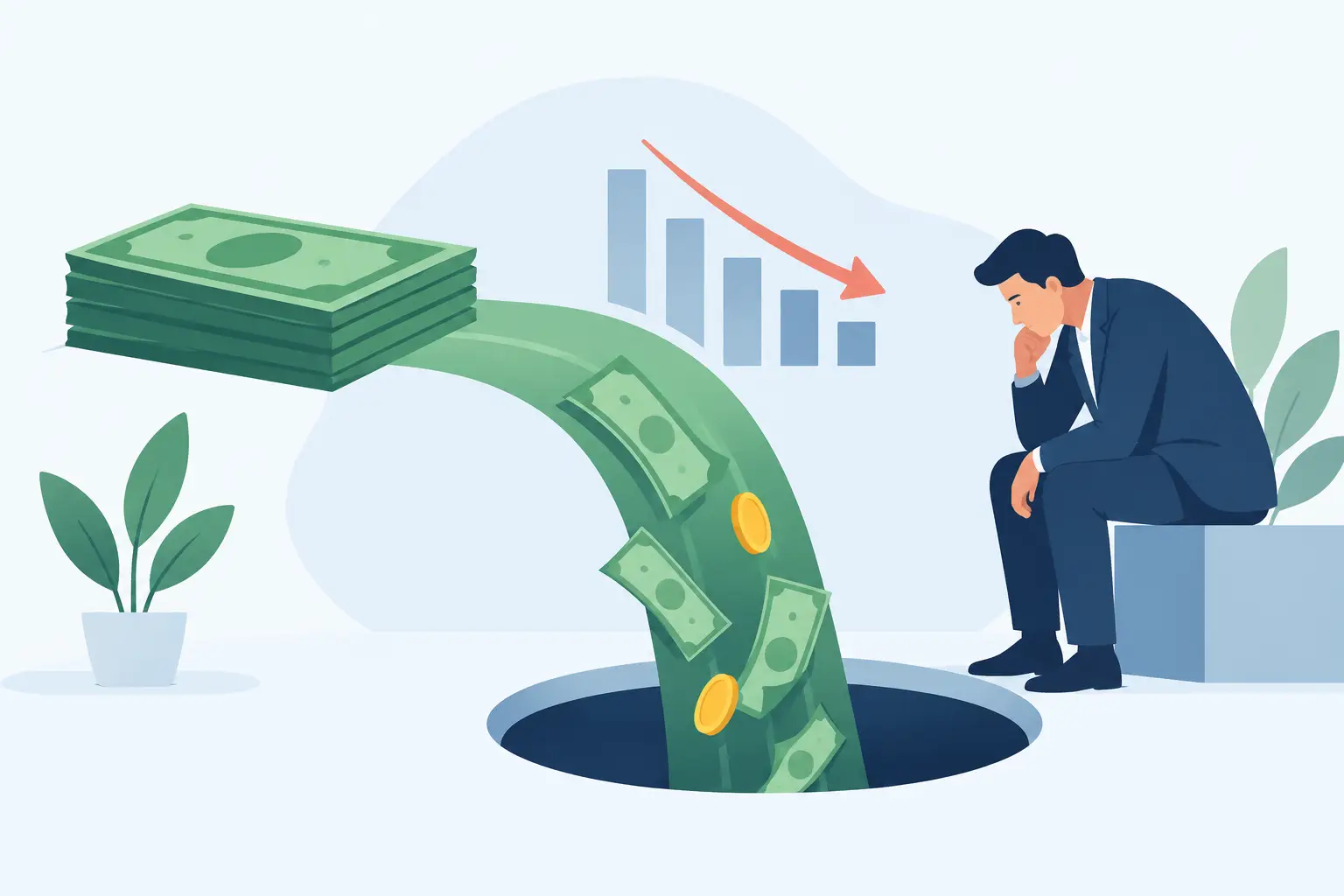
A business can look busy, profitable, and headed in the right direction while its bank balance tells a very different story. If you are asking, why is cash flow negative, the answer is often not that the business is failing. More often, cash is getting tied up, delayed, or spent faster than it is collected.
For a contractor waiting on a large customer payment, a restaurant stocking up before a busy season, or a growing company adding payroll, negative cash flow can happen even during periods of solid sales. The key is identifying whether it is a short-term timing issue or a pattern that needs a change in how the business operates.
What Negative Cash Flow Actually Means
Negative cash flow means more cash left the business during a period than came in. That may sound simple, but it is different from showing a loss on your profit and loss statement.
Profit measures revenue earned minus expenses incurred. Cash flow tracks actual money moving in and out of your bank account. You can record a profitable sale today but not receive payment for 30, 60, or 90 days. Meanwhile, payroll, rent, supplies, loan payments, and taxes may be due now.
That is why a profitable business can still be short on cash. It is also why looking only at monthly revenue or net income does not give an owner the full picture.
Why Is Cash Flow Negative When Sales Are Growing?
Growth is one of the most common reasons for a cash squeeze. More sales usually require more labor, inventory, materials, software, equipment, or marketing before the customer pays.
Imagine a DFW construction company that wins several new jobs. The company may need to purchase materials and schedule crews immediately, but its customers may not pay until milestones are completed or final invoices are approved. Revenue is growing, yet the company is financing the work from its own cash reserves.
Growth is positive, but it needs a plan. If your sales are rising while cash keeps falling, review how much working capital each new job, customer, or product line requires. Some growth is simply too expensive to fund without better payment terms, a line of credit, or a revised pricing structure.
Customers Are Paying Too Slowly
Outstanding invoices are often the first place to look. A sale does not help your cash position until the payment reaches your account.
Slow collections can result from invoices going out late, unclear billing terms, incomplete job documentation, or customers who have learned they can pay whenever they want. Businesses sometimes hesitate to follow up because they value the relationship. But consistent collections are part of a healthy professional relationship.
Start by reviewing your accounts receivable aging report. Separate invoices that are current from those that are 30, 60, or 90 days overdue. Then look for a pattern: Are certain customers always late? Are invoices being sent promptly? Are larger jobs billed in reasonable progress payments, or are you waiting until the end to bill everything at once?
Clear terms, timely invoicing, and regular follow-up can make a meaningful difference without adding a single new customer.
Inventory, Materials, or Prepaid Costs Are Tying Up Cash
Cash can disappear into inventory long before it becomes a sale. Restaurants may purchase more food than demand supports. Retailers may carry slow-moving products. Contractors may buy materials early for jobs that are delayed. Service businesses may prepay annual software, insurance, or vendor costs without planning for the impact on monthly cash.
These expenses are not always wrong. Buying in bulk may reduce unit costs, and prepaying can sometimes save money. The trade-off is liquidity. A discount is not a good deal if it leaves the business unable to cover payroll or sales tax.
Review what you have purchased but have not yet sold, used, or billed to a client. Then compare that amount with your available cash and upcoming obligations. Better purchasing schedules, smaller orders, deposits from customers, and tighter inventory controls can help release cash back into the business.
Payroll and Overhead Have Outpaced Revenue
A growing team can create pressure quickly. Payroll must be funded on schedule, regardless of when customers pay. The same is true for rent, insurance, subscriptions, vehicle costs, utilities, and other fixed operating expenses.
Sometimes the problem is that expenses truly are too high. In other cases, the expense level is reasonable for the business you are building, but revenue has not reached the expected level yet. Those are different situations, and they call for different decisions.
Before cutting costs broadly, identify which expenses directly support profitable work and which ones are draining cash without producing a clear return. A financial review should also account for owner draws, personal expenses paid through the business, and recurring subscriptions that may be easy to overlook.
Debt Payments and Equipment Purchases Are Draining Cash
Loan principal payments do not show up as an operating expense on your profit and loss statement, but they reduce cash. The same is true when you purchase a truck, machinery, computers, or other equipment with cash.
This catches many owners by surprise. They see a positive net income and assume there is room to make a payment or purchase. But the bank account may already be carrying the weight of debt service, tax obligations, and prior commitments.
Equipment can be necessary for growth. The question is whether the payment structure matches the useful life of the asset and the cash the asset will produce. Paying cash for a long-term asset may preserve you from interest expense, but financing may be the better choice if it protects operating cash.
Taxes Were Not Set Aside
Sales tax, payroll tax, franchise tax, and income tax are not optional expenses. Yet they are often treated as available cash until a deadline arrives.
This is especially common for owners whose income varies throughout the year. A strong quarter can create a tax obligation that is larger than expected, particularly when estimated tax payments have not been planned. For businesses that collect sales tax, the risk is even more immediate: money collected from customers is not business income.
Separate tax funds from operating cash as money comes in. A practical tax plan and regular estimates help prevent a predictable obligation from becoming an emergency.
How to Find the Real Cause of Negative Cash Flow
Do not try to solve cash flow by checking your bank balance alone. The balance shows the symptom, not the cause.
Begin with your last three to six months of bank activity and financial reports. In QuickBooks Online, review your profit and loss statement, balance sheet, accounts receivable aging, accounts payable aging, and statement of cash flows if your books are current. The reports need to be accurate for the analysis to mean anything, so uncategorized transactions and unreconciled accounts should be addressed first.
Then ask three practical questions. How much cash is expected to come in, and when? What bills, payroll, debt payments, and tax payments are due before then? Which cash outflows are one-time, and which will repeat next month?
This turns a vague concern into a forecast. Even a simple 13-week cash forecast can show when a shortage is likely, how large it may be, and what action needs to happen before it becomes urgent.
Practical Steps to Improve Cash Flow
The right fix depends on the cause. If customers are paying late, focus on billing and collections. If margins are too thin, review pricing and job costs. If seasonal swings are the issue, build a reserve during stronger months and plan expenses around the slower season.
Several actions commonly help small businesses regain control:
- Invoice as soon as work is completed or a project milestone is reached, rather than waiting until month-end.
- Require deposits or progress payments when materials, labor, or setup costs are significant.
- Set payment terms in writing and follow a consistent collections process.
- Review pricing against current labor, material, delivery, and overhead costs.
- Negotiate vendor terms where appropriate, while protecting relationships with key suppliers.
- Create a separate tax savings account and fund it regularly.
- Build a rolling cash forecast that is updated at least monthly, and weekly during tight periods.
Avoid relying on credit cards or short-term loans as the only answer. Financing can be useful when it supports a clear plan, such as covering a temporary gap while receivables are collected or funding equipment that produces revenue. It becomes risky when it repeatedly covers losses, unpriced work, or ongoing overspending.
When Negative Cash Flow Needs Immediate Attention
A one-time negative month is not always alarming. A large annual insurance payment, equipment repair, or delayed customer payment can temporarily pull cash down. However, take action quickly if you are delaying payroll, using tax money for operating bills, making minimum payments without reducing balances, or depending on new deposits to cover work already completed.
Those signs usually mean the business needs more than a quick cash injection. It may need better financial reporting, firmer billing practices, revised pricing, a debt strategy, or a more realistic operating plan.
For many owners, this is where regular bookkeeping and CFO-level guidance become valuable. Clear books help you see the problem early. Cash forecasting helps you make decisions before the bank balance forces your hand.
Negative cash flow is a signal, not a verdict on your business. With timely information and a willingness to address the cause, you can turn that signal into a practical next move and give your business more room to grow with confidence.